



 UAE
UAE  OMAN
OMAN 
 OMAN
OMAN How to Layer Your Bedroom Like an Interior Designer: 10 Expert Styling Tips
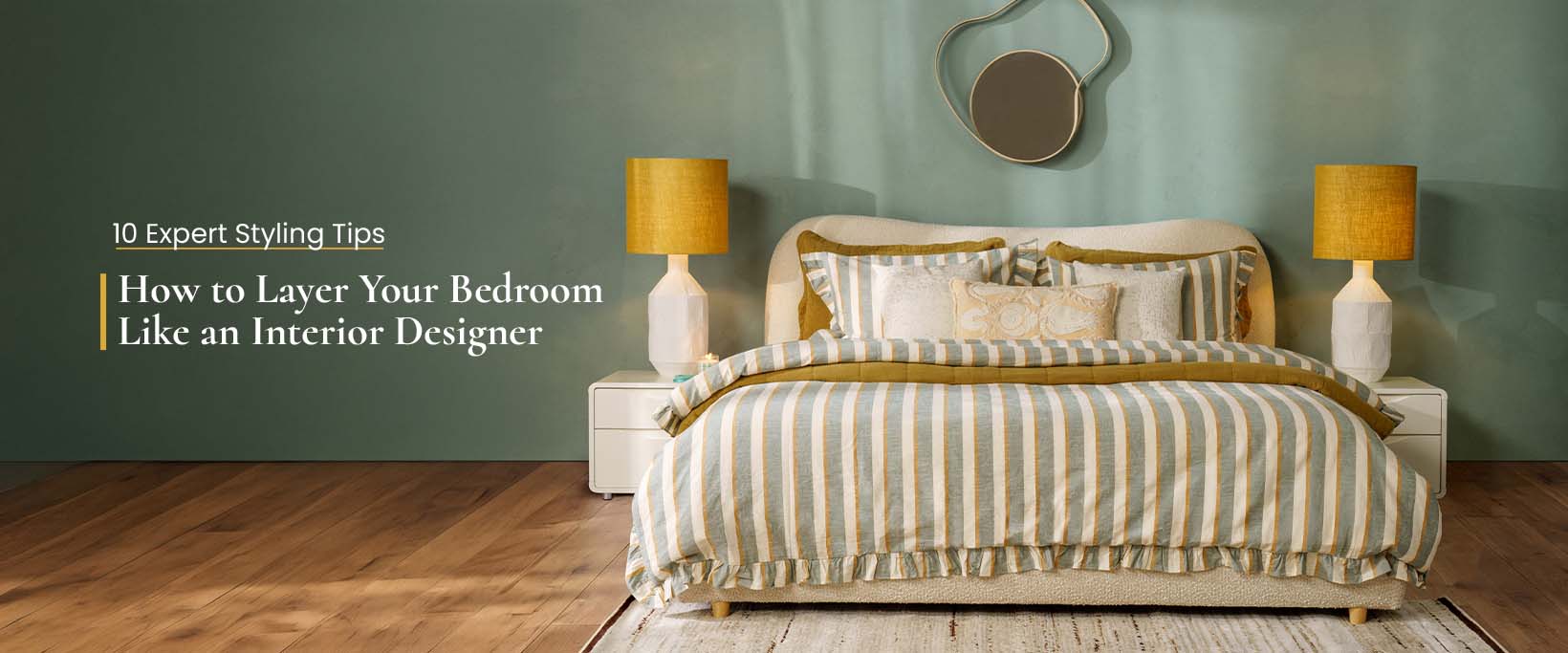
Walk into a bedroom that's been layered well, and you'll feel it before you can explain it: the kind of room where the pillows actually invite you to sit down, the light feels warm instead of clinical, and nothing looks like it was bought in a single trip. That's the idea behind one of 2026's biggest bedroom design trends: layering. Instead of buying more furniture, you build the room in stages, bedding, lighting, texture, décor, until it feels put together rather than just filled. In this guide, we'll walk you through how to layer a bedroom like an interior designer, with tips that work just as well in a big apartment and master bedroom in Dubai as they do in a small apartment.
The good news is you don't need to gut the room to get there. A new throw, the right lamp, a rug in the right spot, and small moves like these do most of the work. That matters even more here in the UAE, where apartment bedrooms often have to earn their space, and where a room needs to feel cool and calm against all that bright light outside rather than adding to the noise.
What Does Layering a Bedroom Mean?
Layering a bedroom means building the room in stages rather than decorating it all at once. Designers rely on this approach because each layer does a distinct job, so the room gains depth naturally instead of looking staged.
Layering works at any scale. A small bedroom needs only a soft layer like a rug, a throw, and a few textured cushions to feel warm without crowding the floor. A larger room can carry the same idea further with a bench at the foot of the bed or a reading chair, so the extra space feels intentional rather than empty. What matters isn't how much you add, but how deliberately each piece earns its place.
Furniture sets the structure, bedding and textures add comfort and colour, lighting shapes the mood, and rugs and decorative accessories give the space its finishing personality.
10 Expert Tips to Layer Your Bedroom Like an Interior Designer
Here's exactly how to layer a bedroom, step by step, the way a designer would approach it.
1. Start with a well-planned bedroom layout.

● Center the bed and position it in front of the longest solid wall near the doorway wherever possible.
● Position the nightstand within reach from the bed without any strain.
● Position the dresser and wardrobe such that they do not hinder natural walking paths in the room.
● At least keep 60-70 centimeters of space free around the bed, more if possible in your room.
2. Select appropriate furniture for your room.
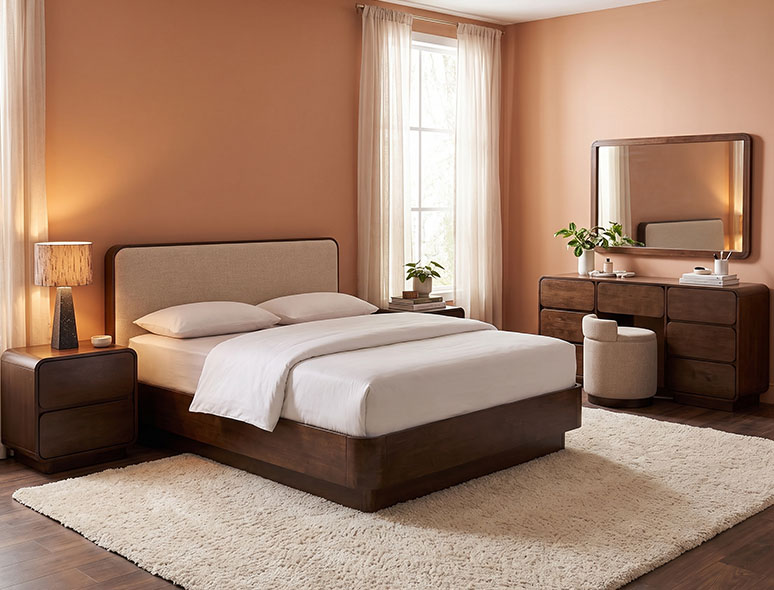
● Measure the room and purchase the nightstands, dressers, and benches accordingly so that they match your room and not the showroom.
● Choose similar furniture, or at least with a similar tone of wood or the same finish for a contemporary design look.
3. Layer your bedding for comfort and style.

● Start with a fitted sheet and flat sheet, add a duvet or comforter, then a lightweight quilt or coverlet folded at the foot of the bed.
● Finish with a throw blanket in a contrasting texture.
● Layer pillows in threes or fours, sleeping pillows at the back, and one or two decorative cushions in front.
● Mix at least two textures, like a woven cotton with a soft velvet.
● For a mid-century modern look, lean into warm neutrals like terracotta, mustard, or olive against a base of oatmeal or walnut brown.
4. Add texture with different materials.
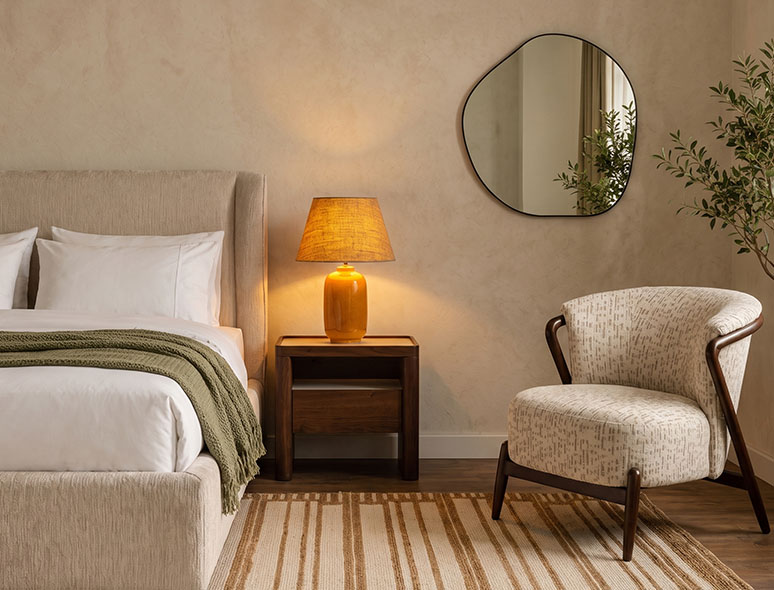
● Mix hard and soft materials deliberately: a wood bed frame against a linen duvet, a metal-framed lamp beside a boucle armchair, and a woven rattan mirror on a plastered wall.
● Combine at least three textures in any vignette, like a rug, a throw, and a cushion cover.
● Lean on natural fibers like linen, cotton, and jute; they read as light and breathable rather than heavy, which suits a warm climate.
● Use the 60-30-10 color theory along with the textures: 60 percent dominating neutral (walls, large upholstery, rugs), 30 percent secondary hue (curtains, accent chairs, bed linens), and 10 percent accent hue (pillows, artwork, pottery), with the dominating and secondary hues being close to each other on the color wheel, creating a soothing base palette where the accent color, such as a rusty pillow or terracotta bowl, is repeated in at least two small places within each vignette.
5. Create a warm ambience with layered lighting.
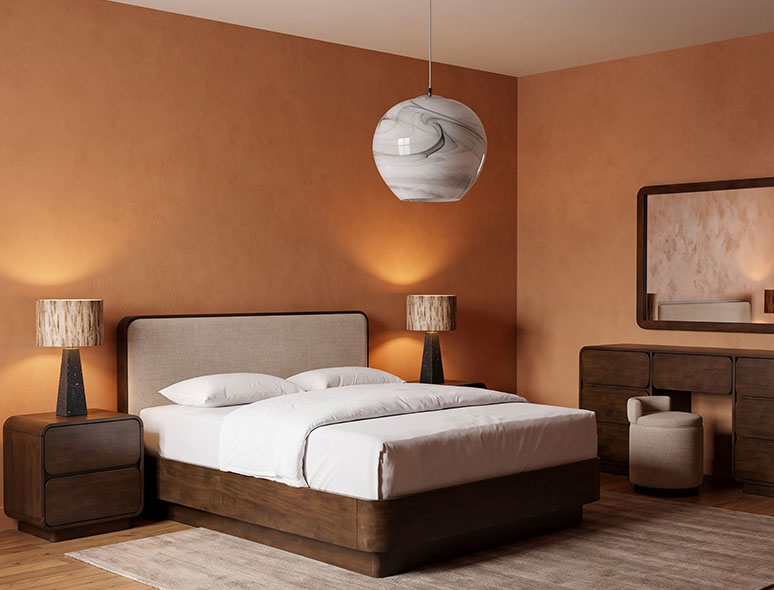
● Include three types of light: ceiling lighting for general illumination, task lighting such as bedside lamps, and accent lighting such as a wall sconce or LED strips.
● Install warmer bulbs, usually between 2700K and 3000K, to create a cozy atmosphere.
● Leave cooler lights for daytime activities in case of a multi-functional room.
6. Introduce soft furnishings for extra comfort.

● Add an area rug beneath the bed that extends at least 45 to 60 cm beyond the sides, so it anchors rather than floats.
● Hang curtains close to ceiling height rather than stopping short above the window; it makes the room feel taller.
● Pick cushions and throws that repeat at least one color from your rug or curtains.
7. Style your bedside tables with purpose.
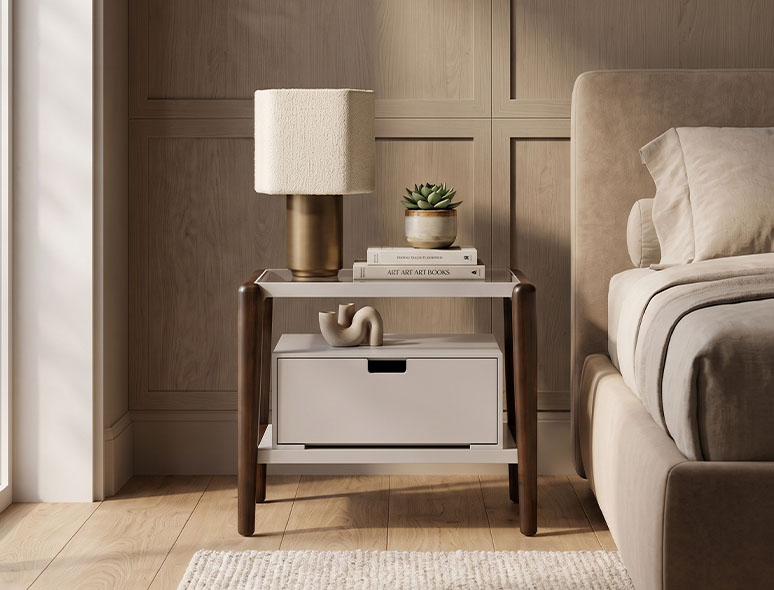
● Keep each nightstand to a small, considered mix: a table lamp, one or two books, a small plant, or a decorative object.
● Leave roughly 70% of the surface empty; a nightstand crowded with objects reads as clutter, not styling.
● Treat it as an edit, not a display.
● If you use two nightstands, style them slightly differently rather than identically; perfect symmetry reads as flat and boring, so vary the height, object count, or item type slightly from one side to the other for a more natural feel.
8. Decorate empty walls thoughtfully.
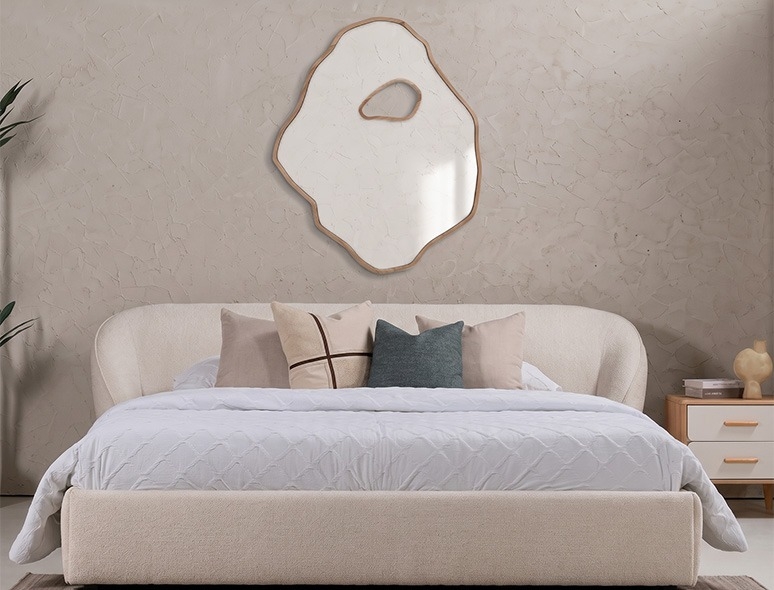
● Choose one large piece of art or mirror above the bed rather than several small scattered pieces.
● For a gallery wall, keep a consistent 5 to 8 cm gap between frames and stick to two or three finishes.
● Leave negative space around any wall feature, a fully packed wall reads busier, especially in a smaller bedroom.
9. Bring nature indoors.

● Add one well-placed plant rather than several small ones.
● Choose a low-maintenance variety like a snake plant or fern plant, useful indoors where outdoor conditions aren't always practical for delicate greenery.
● Pair it with natural materials like a woven basket or ceramic vase for an eco-friendly, grounded feel.
10. Finish with personal touches.

● Add meaningful artwork, a scented candle, a decorative tray, or a few framed photos.
● Keep it to two or three well-styled items rather than ten scattered across every surface.
● Use this layer to take small risks with color or pattern these pieces are easy to swap out later.
Final Thoughts
Now that you know how to layer a bedroom, it's clear the process isn't about adding more, it's about creating depth, balance, and comfort through pieces you already love, added in the right order and proportion. Start with the foundational furniture and layout, then build up gradually with bedding, lighting, texture, and décor until the room feels complete rather than decorated all at once. Along the way, watch for the small mistakes that flatten a room: over-matching every texture, styling nightstands into perfect symmetry, cluttering surfaces instead of editing them, or skipping the 60-30-10 balance so no color has room to breathe. Done thoughtfully, this approach can turn any bedroom, from a small apartment to a spacious family home, into a welcoming and stylish retreat that still feels effortless.
FAQs
How many pillows should I layer on a bed?
Two to four sleeping pillows plus one or two smaller decorative cushions is usually enough for a full look without overcrowding the bed.
What's the difference between layering and just adding more décor?
Layering builds depth in a deliberate order, layout first, then bedding, then lighting, then accessories, while simply adding more décor often just adds clutter without a cohesive plan behind it.
How can you layer a bedroom on a budget?
Focus on a few affordable, budget-friendly updates at a time, such as a new rug, a throw blanket, or a bedside lamp, rather than replacing every piece of furniture at once. Layering rewards good choices more than big spending.
Does OC Home have furniture suited for small bedroom layering?
Yes, OC Home Furniture has a range of mid-century and contemporary styles built for modern UAE homes.
Can OC Home deliver bedroom furniture throughout the UAE?
Yes, OC Home Furniture delivers modern bedroom furniture across Dubai, Sharjah, Abu Dhabi and the wider UAE.


-
 Nihad King Bed 180x200cm WalnutSpecial Price AED 3,429 Regular Price AED 4,595
 -
 Aros Chest of 4 Drawers BrownSpecial Price AED 1,179 Regular Price AED 2,495


